


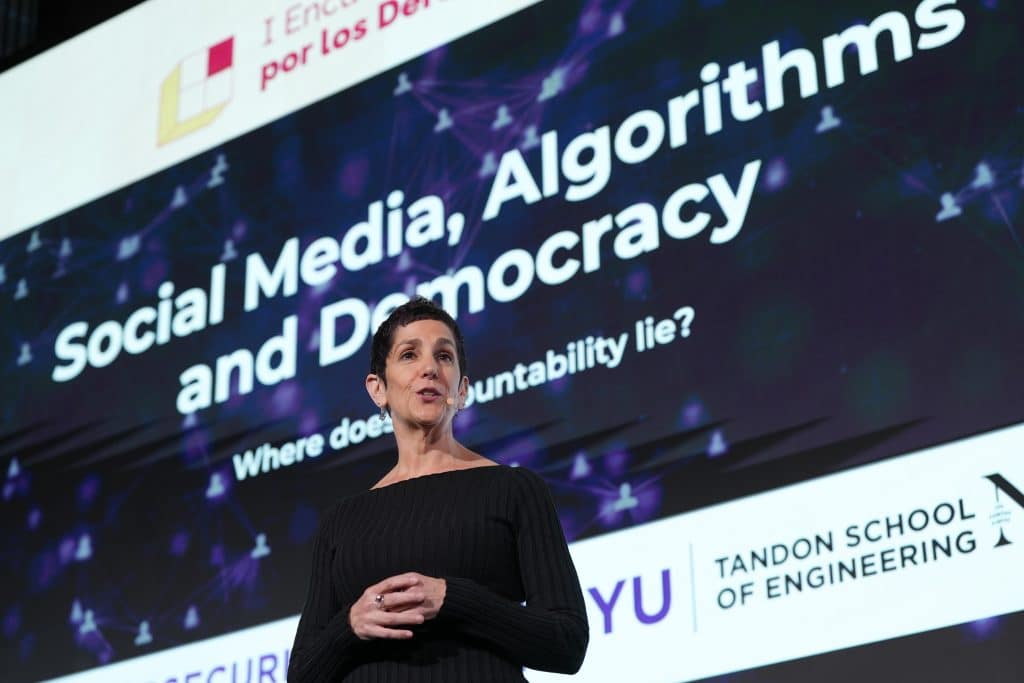
- Yael Eisenstat, technology policy expert and former Facebook executive, warns about the impact of algorithms on democracy at the 1st International Meeting on Digital Rights.
- Eisenstat calls for greater transparency and accountability in the way social media algorithms operate, given their impact on social well-being and public debate.
- “The more we understand how social media works, the stronger we are to change it,” Eisenstat explains.
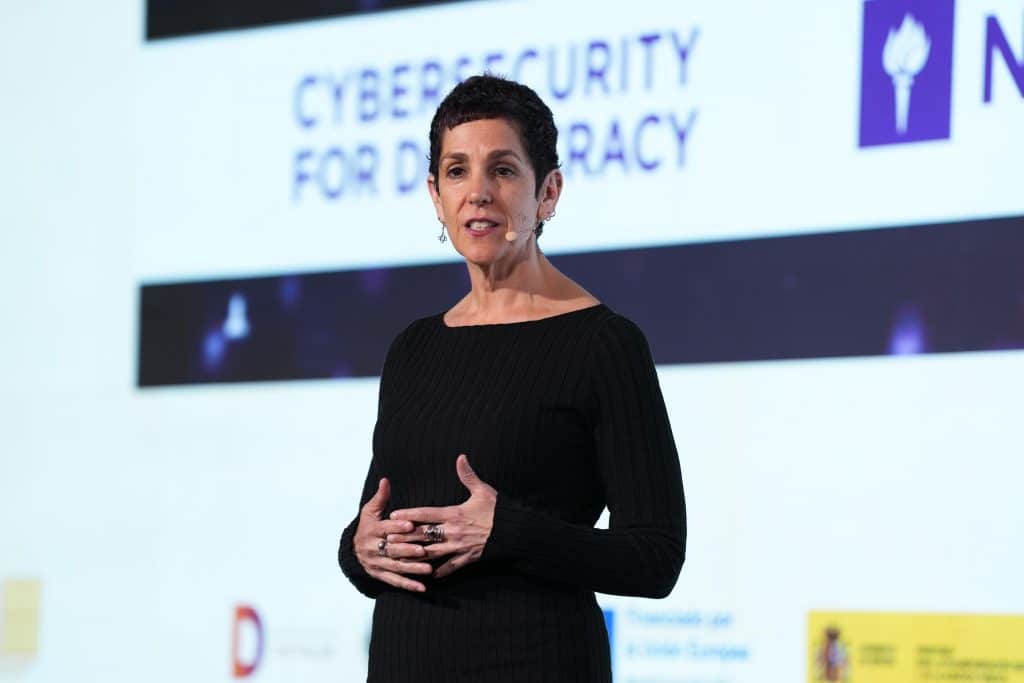
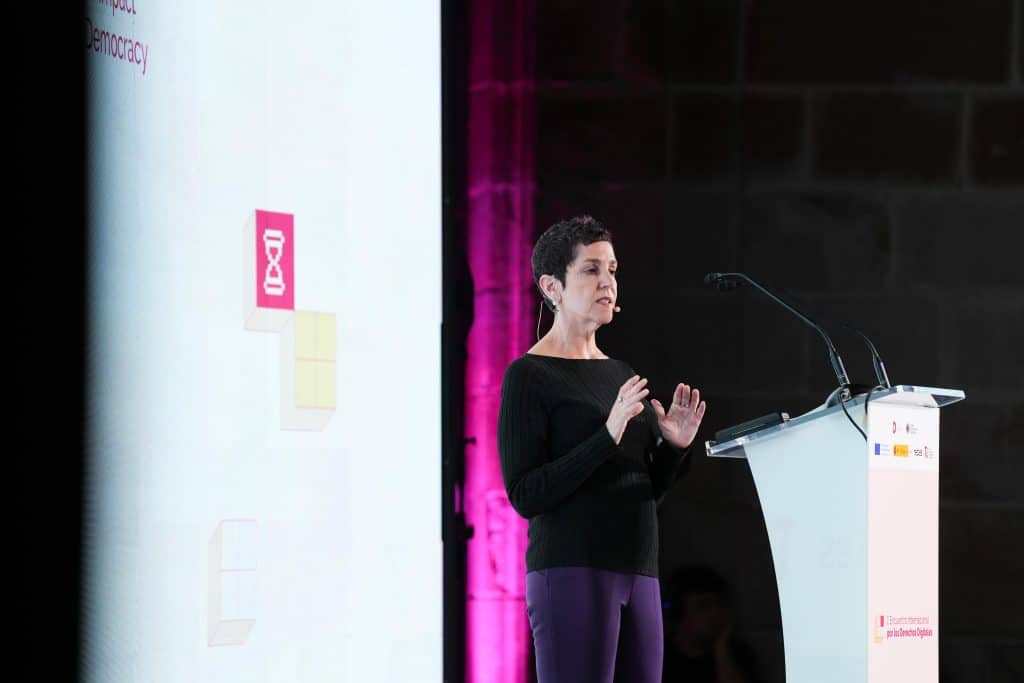
Barcelona, May 13, 2026.– Technology policy expert and former Facebook executive Yael Eisenstat opened the program of the 1st International Meeting on Digital Rights with a speech highlighting the “direct impact that algorithms and social media have on democracy, security, and social well-being.” During her remarks at the event — organized in Barcelona by the Government of Spain and Mobile World Capital within the framework of the Digital Rights Observatory — Eisenstat stressed that “platforms decide which accounts will be amplified and which will be silenced, affecting how messages spread and whether they reach the public.” Far from being neutral, this algorithmic approach “encourages the spread of disinformation and extremist discourse.”
“Although disinformation has existed since the beginning of time, what changes on the internet is the scale and the incentive structure: these business models reward the most emotional and sensationalist content because it generates more engagement. Studies have shown that disinformation proliferates online at very high levels within political discourse,” explained the former Facebook executive, who is currently Policy Director at Cybersecurity for Democracy.
Eisenstat also referred to the way Artificial Intelligence has entered everyday life. “AI companies promise a wonderful future in which their products improve our lives. This is part of what I call the myth of technological exceptionalism. They promise us a better future to avoid accountability or current regulation.” The former Facebook executive also pointed out that “I use some of these products, but carefully. I do not give them access, for example, to my calendar or emails,” because “when these services are free, you are the product. They are using your data to sell targeting tools to advertisers, to sell you products. These same tools are used to target you with political narratives.”
Regulation of digital environments
Another key focus of her speech was the need for transparency regarding how social media recommendation algorithms work, as well as the urgency of establishing effective regulatory mechanisms that require platforms to take responsibility for the impact of their algorithms. “These companies have grown irresponsibly for years due to a very permissive legal environment in the United States. And right now, we have fewer protections than we had over the past decade,” the expert commented.
However, Eisenstat argues that technology companies themselves “are aware of the negative effects their platforms generate, especially among minors.” In response to this situation, she highlighted that Europe is promoting regulatory initiatives aimed at demanding greater transparency and accountability from platforms regarding the functioning and effects of their algorithms.
About Mobile World Capital Barcelona
Mobile World Capital Barcelona is a public-private foundation that promotes the digital development of society to build a more inclusive, equitable, and sustainable future through the human-centered use of technology. MWCapital helps position Barcelona as a global leader in the digital field and strengthens the legacy of MWC throughout the year by promoting initiatives in technology transfer, the development of digital talent, and innovative technology projects with social impact. MWCapital hosts MWC in Barcelona, is the founder of 4YFN, and connects the international developer community through the Talent Arena project.
About the Digital Rights Observatory
Funded by the European Union’s Next Generation funds, the Digital Rights Observatory is a public-private initiative created as a structured response to the ethical, regulatory, and social challenges posed by digitalization. Its goal is to raise awareness of digital rights and the need to protect them, while promoting the implementation of the Charter of Digital Rights approved by the Government of Spain in 2021.
Promoted by Red.es, an entity attached to the Ministry for Digital Transformation and Public Function, the Digital Rights Observatory is made up of the following organizations: Fundación Hermes, Fundación “la Caixa”, Fundación Telefónica, Fundación Atresmedia, Universidad San Pablo CEU, Universidad Autónoma de Madrid, Universidad Carlos III de Madrid, the Spanish Committee of Representatives of Persons with Disabilities (CERMI), Fundación para la Repoblación Sostenible, Universidad Católica del Uruguay, the European Association for Digital Transition, Fundación Hiberus, Universitat de València Estudi General, the Observatory for the Social and Ethical Impact of Artificial Intelligence (OdiseIA), the University of Santiago de Compostela, the University of Navarra, Fundación Diario de Navarra, Comillas Pontifical University, and Fundación Mobile World Capital Barcelona.