


- The event, organised by the Government of Spain and Mobile World Capital, brings together international experts to debate the protection of fundamental rights in digital environments.
- The meeting will feature speakers such as Frances Haugen, data expert and whistleblower behind the publication of the ‘Facebook Papers’; Yael Eisenstat, digital policy expert, former CIA officer and former Facebook executive; Anu Bradford, Professor of Law and International Organisations at Columbia University; and Carissa Véliz, a philosopher specialising in digital ethics and privacy at the University of Oxford, among others.
- A range of free workshops and training sessions for the public will also be held, aimed at raising awareness of issues such as the protection of children in digital environments, cybersecurity, and citizen participation through AI tools.
- The event, driven by the Government of Spain and Mobile World Capital, will take place on 13 and 14 May at the Llotja de Mar in Barcelona.
Frances Haugen, data expert and whistleblower behind the ‘Facebook Papers’, and Anu Bradford, Professor of Law at Columbia University, are the latest speakers confirmed for the Digital Rights Forum. The event, which was presented to the media this morning and will be held on 13 and 14 May at the Llotja de Mar in Barcelona, will bring together more than 50 global leaders to address the main challenges of the digital era.
The 1st Digital Rights Forum is promoted by the Government of Spain and Mobile World Capital Barcelona as part of the Digital Rights Observatory. The event seeks to generate a plural and authoritative debate to reflect on fundamental rights in a context marked by the expansion of artificial intelligence, large-scale data management, disinformation, cybersecurity, and the protection of children and young people in digital environments.
“This Forum is the result of long-term work in defence of digital rights that Spain has been leading since 2021 through initiatives such as the publication of the Digital Rights Charter, the launch of the Spanish Agency for the Supervision of Artificial Intelligence (AESIA), and the creation of the Digital Rights Observatory,” explained María González Veracruz, Secretary of State for Digitalisation and Artificial Intelligence. In her remarks, she also highlighted the fact that the event is being held in Spain, “a country that took the lead in defending digital rights and is the birthplace of ethical, human‑centred AI. Secure and trustworthy digitalisation makes a difference; it is a necessity and also a competitive opportunity.”
For his part, the Director General of Red.es, Jesús Herrero, stressed that “the Forum on Digital Rights was created with the aim of raising awareness and making citizens understand that their rights are also digital, and of bringing the debate on the ethical use of technology to society.”
Internationally renowned speakers
Frances Haugen and Anu Bradford join a line-up featuring influential international voices such as Yael Eisenstat, technology policy expert and former Facebook executive; Carl Öhman, researcher at the Oxford Internet Institute specialising in AI governance and digital ethics; Cory Doctorow, author and digital activist specialising in privacy and digital rights; and Carissa Véliz, philosopher specialising in digital ethics and privacy at the University of Oxford and author of Privacy Is Power (2021) and Prophecy: Prediction, Power, and the Fight for the Future, from Ancient Oracles to AI (April 2026).
The programme will also include national and international figures such as Daniel Innerarity, Director of the Globernance Institute; Genís Roca, President of Accent Obert; Erika Staël von Holstein, adviser to the Government of Spain on artificial intelligence; Trisha Prabhu, founder of the ReThink initiative against online harassment; and Marc Silver, director of the documentary Molly vs The Machines, among others.
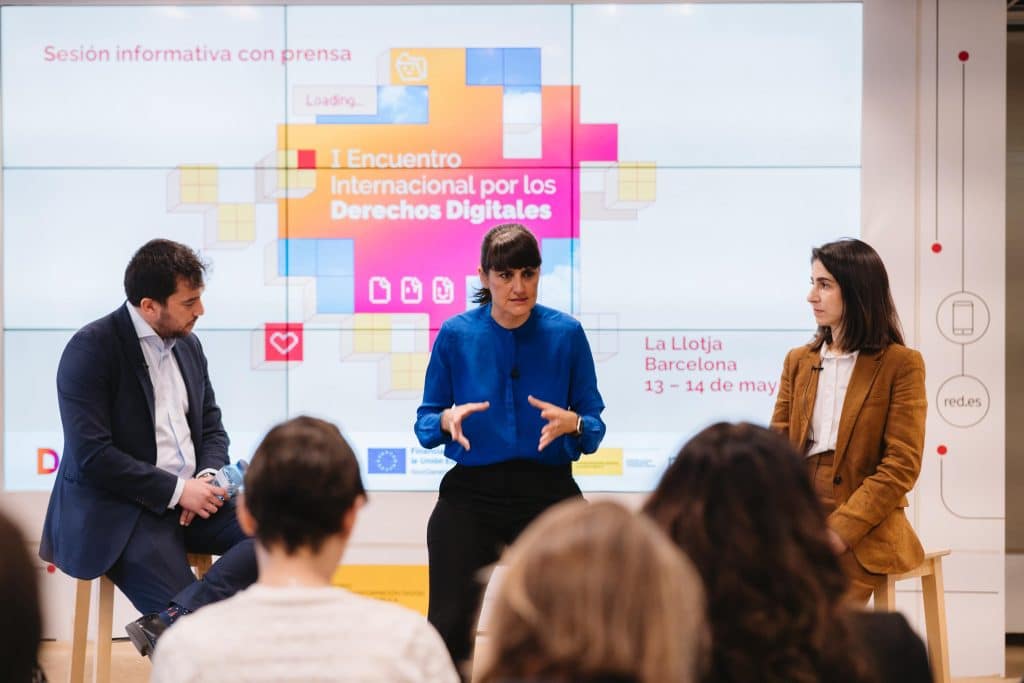
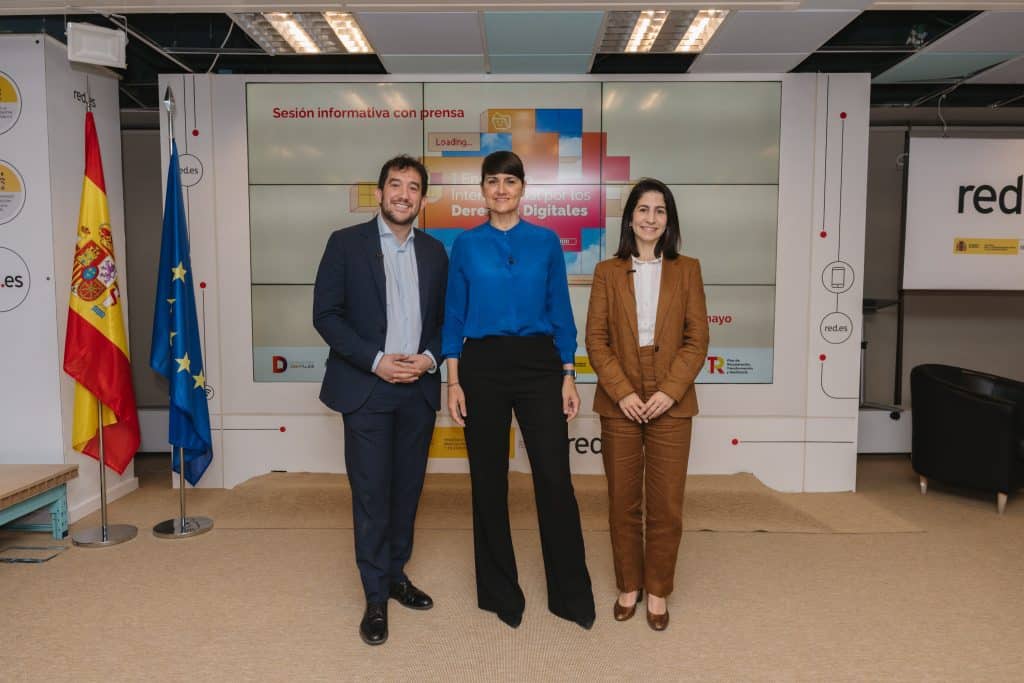
Image: the Director General of Red.es, Jesús Herrero; the Secretary of State for Digitalisation and Artificial Intelligence, María González Veracruz; and the Director of Communications and Public Relations at Mobile World Capital Barcelona, Laia Corbella.
An agenda focused on the major digital challenges
The programme of the Digital Rights Forum is structured around five main pillars: cybersecurity; digital democracy and freedom of expression; identity and privacy; artificial intelligence; and youth and child protection.
Across the two days, keynote speeches, fireside chats and round-table discussions will address issues such as the impact of algorithms on democracy, technological geopolitics, regulation of major digital platforms, the sustainability of digital rights, post‑mortem personal data protection, and the impact of AI on young people.
Workshops and activities open to the public
Alongside the main programme, the Forum will offer free workshops and activities for the public, designed as practical spaces for awareness‑raising and public engagement. These sessions will cover topics such as the protection of minors in digital environments, cybersecurity, the responsible use of artificial intelligence, and new forms of civic participation enabled by AI.
Visitors will also be able to see the exhibition “Today is a Good Day to Talk About Digital Rights”, curated by Fundación Telefónica and Domestic Data Streamers. The exhibition incorporates the Collective Manifesto of Digital Rights, created from public contributions.
In addition to the exhibition, Fundación Telefónica will deliver two workshops aimed at young people, reinforcing the educational and participatory focus of the project. The first, ‘Behind the Like’, will take place as a parallel activity at the 42 Barcelona campus and is aimed at young people aged 14 to 17. The second workshop, ‘Hacking Hate Speech: Technology to Transform Social Media’, will take place during the Summit itself and is aimed at young people aged 16 to 20.
The Digital Rights Forum marks the culmination of the work of the Digital Rights Observatory, a public‑private initiative within the Spanish Government’s Digital Rights Programme, led through Red.es. Over the past 18 months, 360 specialists and 50 organisations from Spain and Ibero‑America have carried out more than 100 research and dissemination activities with the aim of generating knowledge, promoting public policy and strengthening the protection of rights in the digital environment.